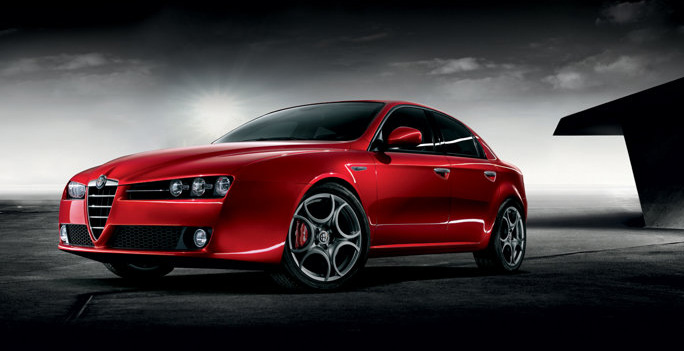
The new Gallardo LP560-4, Lamborghini once again sets a higher standard for super sports cars. With its new engine, permanent four-wheel drive transmission and new suspension, it delivers clearly improved performance and dynamics. In parallel, its innovative design takes the classic lines unique to the Lamborghini brand one step further. Powerful elegance has never been so defined before.
The Lamborghini Gallardo LP560-4 is the successor of the most successful Lamborghini model of all time. Approximately 7100 Gallardo models have left the Sant'Agata Bolognese production plant since its launch in 2003. "The LP560-4 will consolidate this success story," states Stephan Winkelmann, President and CEO of Automobili Lamborghini. "It will outclass its predecessor in every aspect; its dynamics are distinctly breathtaking and its design sets new standards. With the introduction of the Lamborghini Gallardo LP560-4, we will consistently continue Lamborghini's growth strategy".
The powerful heart of the
Lamborghini Gallardo LP560-4 is the new 5.2 litre V10 engine with an output of 560 PS (412 kW) at 8000 rpm. The increase of 40 PS compared with that of the previous Gallardo, and the approximate 20 kilogram reduction in weight, improves the power weight ratio to 2.5 kilograms per PS (hp) and thus enhances performance. The LP560-4 accelerates from 0-100 km/h in 3.7 seconds, its speed at 11.8 seconds is 200 km/h and its top speed lies at 325 km/h. At the same time the new, highly efficient engine enthrals its driver with its direct fuel injection system - "Iniezione Diretta Stratificata". Despite its clearly increased power, fuel consumption and CO2 emissions have been reduced by a staggering 18 per cent.
The engineers in the Sant'Agata-based Technical Department have also improved traction, handling and stability at high speeds. The redesigned four-wheel drive transmission, the new suspension and the optimised aerodynamics as well as the reduced weight and decreased friction between the components, all contribute to the overall improvements in the vehicle. Thus the
Lamborghini Gallardo LP560-4 presents itself as a cutting edge super sports car also suitable for the race-track. The car is also surprisingly suited to long-distance driving and despite its extreme performance capabilities is easy to control whilst maintaining utmost stability.
The Style - Powerful eleganceA Lamborghini is and always will be a highly efficient athlete. Its extreme sensuality is based upon precision, performance and on spontaneous action. A Lamborghini's elegance is that of stark, purist strength. This DNA of the Lamborghini brand is being continuously developed by the Centro Stile in every new car. Thus the
Lamborghini Gallardo LP560-4 displays the precise lines and clean surface edges in its distinctly minimalist design. Ornaments or embellishments of any form are alien to it.
Evolution of form systematically follows the demands of function: the newly designed front of the LP 560-4 squats deeply to the ground which contributes to its aerodynamic efficiency. The enlarged and clearly accentuated cooling intakes meet the demands of augmented engine power thus increasing the air circulation vital to a vehicle as powerful as this. The spoiler, positioned low between the air intakes, improves aerodynamic equilibrium at high speeds.
Characteristic LED - Daytime running lightThe new headlights have a characteristic 'daytime' running light integrated beneath the Bi-Xenon lamps: 15 diodes (LED) have been positioned in a Y structure. The same motif appears again in the rear tail-lights. The stop and brake lights have been inspired by the Miura Concept, the Murci�lago LP640 and the Revent�n and display the Y form three times over.
The bodyWeight is undesirable in a sports car and a lightweight model encourages the dynamics of such a vehicle. Aluminium is much lighter than sheet steel and this is why the
Lamborghini Gallardo LP560-4 is produced with a body in a much lighter but nevertheless more stiff structure: the two-seater car measures 4.34 metres in length, 1.90 metres in width and a mere 1.16 metres in height. It weighs in dry at 1410 kilograms - which is, effectively, 20 kilograms less that that of the previous Gallardo.
The construction of the
Lamborghini Gallardo LP560-4 utilises what is known as a 'spaceframe construction method'. Integrally moulded node elements and extruded parts create its frame, and sheet metal plates made out of aluminium have been neatly and securely integrated to form the body. The body is not only extremely light but also torsionally stiff and displays the highest safety characteristics. Thus the basis for the extraordinary handling characteristics of the LP560-4 is formed.
The Engine - Extreme power in every situation
The engine of the
Lamborghini Gallardo LP560-4 is a completely new development. All that remains of the original V10 is the number of cylinders which, in this performance category, create a perfect and unique synthesis of torque, force of movement, sporty nimbleness, compact size and low weight.
Direct fuel injection improves efficient combustionTransmission - Superior control four-wheel driveSuch extreme power must be brought onto the streets with extreme reliability. The driver of a Gallardo LP560-4 can thus rely on the four-wheel drive Viscous Traction (VT) system, with the '4' in the model name a reminder of this. Lamborghini already introduced this system with the Diablo VT in 1993 - and for good reason: four actuated wheels achieve more grip than two and permit acceleration earlier in the curve exit.
The protagonist in the transmission is the central viscous-coupling which requires no electronic control. In this special Lamborghini configuration, the driving torque is distributed between front and rear - generally with a 30:70 front to rear ratio and, within milliseconds, adapts to even the slightest variations in road conditions. A mechanical differential on the rear axle provides up to 45% limited slip and an electronic differential lock at the front complete the four-wheel drive system.
Superior traction and handlingNot only does the maximum traction take advantage of the permanent four-wheel drive system, but also the car's clearly superior handling. Each wheel can only transfer a certain amount of torque to the road. As the propulsion power is distributed onto all four wheels through the viscous traction system, more potential for directional control remains - and reserves in every situation distinguish a perfectly made sports car.
Despite all the engine thrust, changing gears in the
Lamborghini Gallardo LP560-4 is one of the most exciting experiences of driving this vehicle. It is still the customer's personal preference as to whether he wishes to change gears manually through the exact 'gate' guides of the six-speed gearbox via the short gear stick, or whether he prefers to let his fingertips control the e.gear's paddle-shift system located behind the steering wheel: the latter solution becoming the preference of the majority of Lamborghini customers.
The gear change time reduced by 40 per cent
The automated e-gear transmission has been completely redesigned and improved in all aspects. The complete system has not only been reduced in weight, but the time employed to change gears has also been reduced by 40 per cent in "CORSA" mode. The driver may choose between five different driving and changing programs: in addition to the 'normal' mode, the
Lamborghini Gallardo LP560-4 a SPORT programm with its even more rapid gear changing times and increased number of revolutions.
The CORSA program directs the engine to optimum acceleration. It permits a greater slip angle and also allows - with maximum safety - the full dynamism of the LP560-4 to be enjoyed even on a race-track. The 'Thrust Mode' ensures maximum acceleration from neutral while the angle of the throttle valve and the clutch are here optimally adjusted to one another. Finally the Automatic mode: here the engine changes gear in total independence and permits a particularly comfortable mode of driving.
The Suspension - High-tech parts with Lamborghini know-how
Even the Lamborghini Gallardo LP560-4's predecessor was one of the world's best super sports cars with regard to handling, precision and driving stability. However, the latest model provides an even more intense driving experience: the new suspension improves the car's handling, its driving comfort and its directional stability at high speeds.
The
Lamborghini Gallardo LP560-4's space frame is uncompromisingly high tech. Its technical production was conceived from motor sport technologies. The double wishbones made out of aluminium with newly designed kinematics, while the springs and shock absorbers are tightly adjusted for grip.
The rear axle now has an additional track rod which further improves the excellent control of this super sports vehicle. Newly developed elements are the rubber-metal bearings - authentic high-tech parts - which clearly improve the special Lamborghini driving dynamics with well-chosen material combinations and cleverly defined assembly.
Precise, breathtakingly fast, whilst stable and free from surprises, the
Lamborghini Gallardo LP560-4's dynamics assures a sensuous experience. The LP560-4's tyres (format 235/35 ZR 19 front and 295/30 ZR 19 rear) appear to bond with the asphalt. Specially developed Pirelli P-Zero series tyres are fitted: these have a particularly low roll resistance which also maintains tyre wear at a minimum without, of course, any reduction in their performance quality. At a speed of over 120 km/h an independently extended rear spoiler increases the downforce on the rear axle It acts in association with the specially formed underbody which directs the airstream under the car.
Optional Carbon Ceramic Brake system
The new braking system acts with brute force. At the front, eight 'Brembo specialist' cylinder callipers grasp the 365 mm diameter brake discs. At the rear, four cylinder callipers act on the 356 mm brake discs. In addition, the new disc ventilation system improves the stability in extreme situations. Optionally, discs made out of Carbon Ceramic are offered. At the front the CCB (Carbon Ceramic Brakes) discs measure 380mm in diameter and at the rear 356mm. They deliver much improved performance at a reduced weight. In total, the CCB braking system is lighter in weight that, at the wheel, improves driving dynamics and comfort.
The interior and trimWith the
Lamborghini Gallardo LP560-4 Lamborghini provides its customers with a generous and sporty standard equipment package. Direct from the production line, a customer will find included in his vehicle passenger and lateral air-bags; a two-zone air-conditioning system with sun regulation; The Lamborghini Multimedia System including an USB connector; and sports seats with an electronically operated backrest. In addition to this, the interior trim includes fine leather and Bi-Xenon headlights with LED daytime running light. The car is supplied with new Apollo wheels as standard.
Technical data* Type: 10 cylindres V90�, DOHC 4 valves,common-pin crankshaft
* Displacement: 5204 cc
* Compression ratio: 12,5 : 1
* Maximum power: 412 kW (560 ps) at 8000 rpm
* Maximum torque: 540 Nm 6500 rpm
Performance* Top speed: 325 km/h
* Acceleration (0-100 km/h): 3,7 sec.
* Acceleration (0-200 km/h): 11,8 sec.
Dimensions* Wheelbase: 2560 mm
* Overall legth: 4345 mm
* Overall width: 1900 mm
* Overall height: 1165 mm
Fuel Consumption with E-Gear* Urban: 21 L/100 km
* Extra urban: 10 L/100 km
* Combined: 14 L/100 km
* Emission: Euro 4
* CO2: 327 g/km
Fuel Consumption with manual trasmission* Urban: 22 L/100 km
* Extra urban: 10 L/100 km
* Combined: 14,7 L/100 km
* Emission: Euro 4
* CO2: 351 g/km