Recent Articles

Showing posts with label Mercedes-Benz. Show all posts

Thursday, September 29, 2011

Mercedes-Benz A-Class Concept, 2011


Mercedes-Benz A-Class Concept, 2011

In 1993 Mercedes-Benz ventured into a completely new vehicle class with the revolutionary concept of the Vision A 93. Now the brand is once again presenting a car that might have come from another planet: the Mercedes A-Class Concept is the first heartbeat of a new generation whose expressive design stands for concentrated dynamism. The Mercedes-Benz A-Class Concept is celebrating its premiere at the Auto Shanghai show (21 to 28 April 2011). The technical highlights of this front-wheel drive Concept car include a new, turbocharged four-cylinder petrol engine developing 155 kW (210 hp), a dual clutch transmission and a radar-based collision warning system with adaptive Brake Assist.

Low silhouette and slim window areas: the proportions of the A-Class Concept stand for concentrated dynamism. Its sporty appearance is given particular depth by the interplay between lines and surfaces. "The A-Class Concept introduces the new Mercedes-Benz design idiom into the compact class in a sculptured, light and expressive interpretation," says Professor Gorden Wagener, Head of Design at Mercedes-Benz. "We use the term 'captured energy' to express the sheer dynamism exuded by the A-Class Concept. Our formal sources of inspiration were the wind and waves, as well as aviation engineering, resulting in this "cool" look."

New turbocharged petrol engine, seven-speed dual clutch transmission
But it is not only visually, but also technologically that the Mercedes-Benz A-Class Concept is ushering in a new compact class era at Mercedes-Benz. This front-wheel drive model is powered by a four-cylinder petrol engine from the new M270 series. It was designed for transverse installation, and thanks to direct injection and turbocharging it offers a high performance potential together with minimal emissions and fuel consumption. Other highlights of the all-aluminium engine include injection pressures of up to 200 bar and fast-responding piezo injectors.

The A-Class Concept is equipped with the two-litre variant of the new engine, developing 155 kW (210 hp). This BlueEFFICIENCY unit is combined with the new Mercedes-Benz dual clutch transmission. As a three-shaft transmission, this has seven forward gears which are shifted automatically with no interruption in tractive power. The new transmission is therefore particularly economical, sporty and comfortable.

The Exterior design with defined edges and a free interplay with the body surfaces
One major characteristic of the new design idiom at Mercedes-Benz is the expressive interplay between lines and surfaces - which the designers refer to as a "clean" Concept. Thanks to concave and convex surfaces with the resulting light modulation, this creates a unique sculpture-like presence. The A-Class Concept emphatically continues this theme of defined edges and interacting surfaces, which Mercedes-Benz first showed in the F800 Style. The side view is structured by three prominent lines: the front structural edge forms a dropping line towards the rear, while the pronounced shoulder muscle over the rear axle emphasises the car's coup�-like character. A further line extends upwards in front of the rear wheel arch in a sweeping curve. These lines lend more depth and dynamism to the side profile. The door handles are recessed into the doors, and emerge electrically at the touch of a button.

The unusual, wing-like structure of the exterior mirrors is suggestive of flow and lightness. Another prominent feature is the open side skirt, which creates an unusual light-and-shadow effect. Reminiscent of a turbine rotor, the large 20-inch wheels reinforce the impression that the Mercedes-Benz A-Class Concept has been shaped by the wind.

The front end of the Mercedes-Benz A-Class Concept is a real eye-catcher. The brand logo appears to be surrounded by a starry sky. Where there are usually apertures or louvres, the radiator grille consists of numerous metallic silver "dots" on black stems. This theme is reflected in the design of the wheels.

The visually wide rear end exudes power and athleticism, and is likewise enlivened by an interplay between convex/concave surfaces and pronounced edges. The tail light clusters continue the lines of the muscular shoulders towards the rear, emphasising the car's width with their horizontal orientation. The aerodynamic spoiler lip in the tail lights improves efficiency, while the diffuser creates a downforce to aid roadholding.

The Interior dominated by associations with aviation engineering
The interior of the Mercedes A-Class Concept, which is flooded with light from the large panoramic roof, likewise appears to be from another planet. Many of the unusual features were inspired by aircraft engineering, at the same time reflecting ideas from the "Mercedes-Benz Aesthetics No. 2" interior sculpture. Various component groups have been reduced to a minimum, for example the dashboard and centre console are merely brushed aluminium structures. The result is a transparent, light, bionic design effect.

As an extremely eye-catching detail inside the A-Class Concept, the dashboard takes the form of an aircraft wing and has a translucent, stretchable textile lining. Thanks to this sophisticated fabric, which is vapour-coated with chrome particles, the bionic cellular structure of the dashboard remains visible - its design is reminiscent of a canvas-covered aircraft wing whose underlying struts are discernable. Dramatic backlighting makes this instrument carrier appear particularly futuristic. Thanks to the translucent high-tech lining and lack of a conventional support structure, the dashboard appears to be free-floating. Its lines continue into the door panelling like vapour trails from the winglets of a jet.

The Mercedes-Benz A-Class Concept makes use of modern materials such as the high-tech lining on the dashboard, or metallised leather where semi-aniline is dyed with metallic pigments and embossed, and also high-grade nubuk leather. This builds a bridge between 125-year tradition of the Mercedes-Benz brand and its claim to progressiveness.

COMAND Online with revolutionary graphic design offers ease of use for smartphone applications
A smartphone is fully integrated into the operating systems of the Mercedes-Benz A-Class Concept. When the phone is inserted into the recess provided in the centre console, it is automatically synchronised with the COMAND multimedia system. All the functions of the smartphone, including internet radio, email and social networks such as Twitter or Facebook, are shown as applications on the 17.8 cm display and can be operated via the rotary/push control.

The visual presentation of the screen elements is unique, with a deep, three-dimensional look created by laser-like, magenta-coloured lines. This near-series display Concept was designed and realised by designers and engineers at the Mercedes-Benz development laboratory in Palo Alto/USA. The menus in the Mercedes-Benz A-Class Concept are in both Mandarin and English.

The Headlamps with optical fibres produce a unique effect
A very special effect is created by the lights of the Mercedes-Benz A-Class Concept, as the innovative full-LED high-performance headlamps repeat the starry sky motif of the radiator grille with numerous lighting points. The daytime running lamps consist of 90 optical fibres with aluminium sleeves, and they are arranged in a wing-shape within the headlamp. The tentacle-like fibres form individual, diffused light sources to create a dramatic contrast between soft and harsh.

New assistance and braking system reduces the risk of rear-end collisions
In the A-Class Concept, safety pioneer Mercedes-Benz is showing another milestone in the democratisation of automotive safety technology: the concept car is equipped with a radar-based collision warning system with adaptive Brake Assist - a world first in the compact class. This system gives a visual and acoustic warning to a possibly inattentive driver, and prepares Brake Assist for an absolutely precise braking response which is initiated as soon as the driver emphatically operates the brake pedal.

Wednesday, September 28, 2011

Mercedes-Benz F125 Concept - Auto Shows


This car doesn�t exist yet. Most of its technologies are still under development. It is a construct�more mental than metal�and it exists in the heads of engineers at Daimler�s advanced vehicle engineering in Sindelfingen, Germany, perhaps even more fully than it will exist as a physical, drivable artifact set to be unveiled at this year�s Frankfurt Auto Show.
They call it the F125. The �F� stands for �Forschungsfahrzeug,� or experimental car, and the number refers to the 125th anniversary of the automobile, an occasion celebrated most ardently at Mercedes-Benz. After all, it was the 1886 Benz Patentwagen that came first. The F125 is the Patentwagen�s antipode�a look at how the luxury car might evolve to suit the world circa 2025. It suggests that the pace of evolution will be brisk: The F125 is an electrically driven, hydrogen-fuel-cell�powered, full-size luxury sedan with the range of a diesel, and it is just two model cycles away from the current S-class.
To see the car before its auto-show debut, we went to Sindelfingen near Stuttgart, passed all security gates, and stepped into the most exalted room in Daimler�s research center, the so-called Dom (German for cathedral). It�s very quiet here, very clean, and the walls are an arctic white. The light is artificial; there are no windows. We�re with Gorden Wagener, head of Mercedes-Benz Design, and Herbert Kohler, Daimler vice-president of Research & Advanced Engineering. They are standing next to their vision of the Mercedes S-class�s grandchild.
The F125�s body is 197 inches long, 78 inches wide, and only 56 inches high. More stunningly, it opens via two giant gullwing doors. They are as huge as porch roofs, and they occupy nearly 90 percent of the car�s wheelbase�118 inches cut out of the 131 inches between the axles. Entry into the front and rear is as easy as falling into a recliner�it ought to be; there are no B-pillars in the way.
At first glance, the car looks like a coupe, or at least a hatchback. �No,� says Wagener, �it�s a further development of the sedan shape,� pointing to the three-box configuration and 17-cubic-foot trunk. But the overall envelope, with its low greenhouse, fast roofline, and crouched stance, suggests that the S-class, long the staid burgher of the luxury-sedan world, is about to get seriously sleek. The biggest change may be that, after more than a century, the classic framed grille disappears, replaced by six gill-like slats topped with chrome bars.
As befits the futurism of its shape, the car�s structure and bodywork are a mixture of composite plastics (including carbon fiber), aluminum, and high-strength steel. The body shell itself weighs only 551 pounds, or 40 percent less than that of today�s S-class. Total weight is just 3750 pounds; for comparison�s sake, the current S400 hybrid weighs nearly 850 pounds more.
The interior seats only four. Its driver-oriented cockpit includes 3-D displays, a cloud-based telematics system, and an asymmetrical rear-seating concept. By folding the front-passenger�s seat forward into the footwell, the right-side rear seat can be extended into a business-class chaise, � la Maybach 62. The driver gets his toys, too: Besides voice-controlled systems (navigation, e-mail, internet access), other functions are triggered by hand gestures. Swiping a hand quickly to the right turns on the wipers; pointing a thumb to the right engages the right-hand turn signal; and lifting a hand horizontally raises the temperature. No word yet on what a flip of the ol� bird will do.
The F125�s proportions suggest rear-drive, but the concept has an electric motor at each wheel comprising what Mercedes calls its e4MATIC system. Even so, outputs denote a rear-wheel bias: The front motors are capable of 67 horsepower and 55 pound-feet of torque apiece, while each rear motor is rated at 134 horses and 148 pound-feet. Peak horsepower is 308; continuous output is 228.
The most interesting F125 technology is its source of electricity. An advanced lithium-sulfur battery is packaged vertically behind the rear seats. With a 10-kWh capacity and an energy density of 159 Watt-hours per pound, this battery beats current lithium-ion mass efficiency by a factor of two. A hydrogen fuel cell located between the front wheels provides the electrical energy needed to maintain the battery�s charge while driving. But instead of storing the hydrogen for the fuel cell as a cryogenic liquid or as a high-pressure gas, it contains the hydrogen within a metal-organic framework (MOF) material. This highly porous crystalline substance has more than 24 million square feet of surface area per pound. When gaseous hydrogen is pumped into the fuel tanks at 435 psi, it�s chemically absorbed by the MOF material in molecular form (H2). Since the size and shape of the MOF storage vessels are flexible, they can be integrated with the F125�s body structure to save space and weight.
Mercedes says the F125 will consume hydrogen at a rate of 2.8 pounds per 100 miles, giving it a range of more than 600 miles. According to Kohler, �The average fuel consumption is equivalent to an 87-mpg diesel.� The small matter of where the hydrogen comes from has yet to be resolved. That, apparently, is what the next 13 years are for.
What has been established is that the future S-class can�t afford to be a slug. Thanks to its reduced weight and linear power delivery, the series-production F125 will need only 4.9 seconds to hit 62 mph from standstill and 3.2 seconds to accelerate from 50 to 75 mph, according to Mercedes.
So here is the company�s vision of the luxury-car future�a veritable chemistry lab hard at work under a body and interior as beautifully crafted and silent as a British gun cabinet. This could get expensive.


by caranddriver.com

Tuesday, July 26, 2011

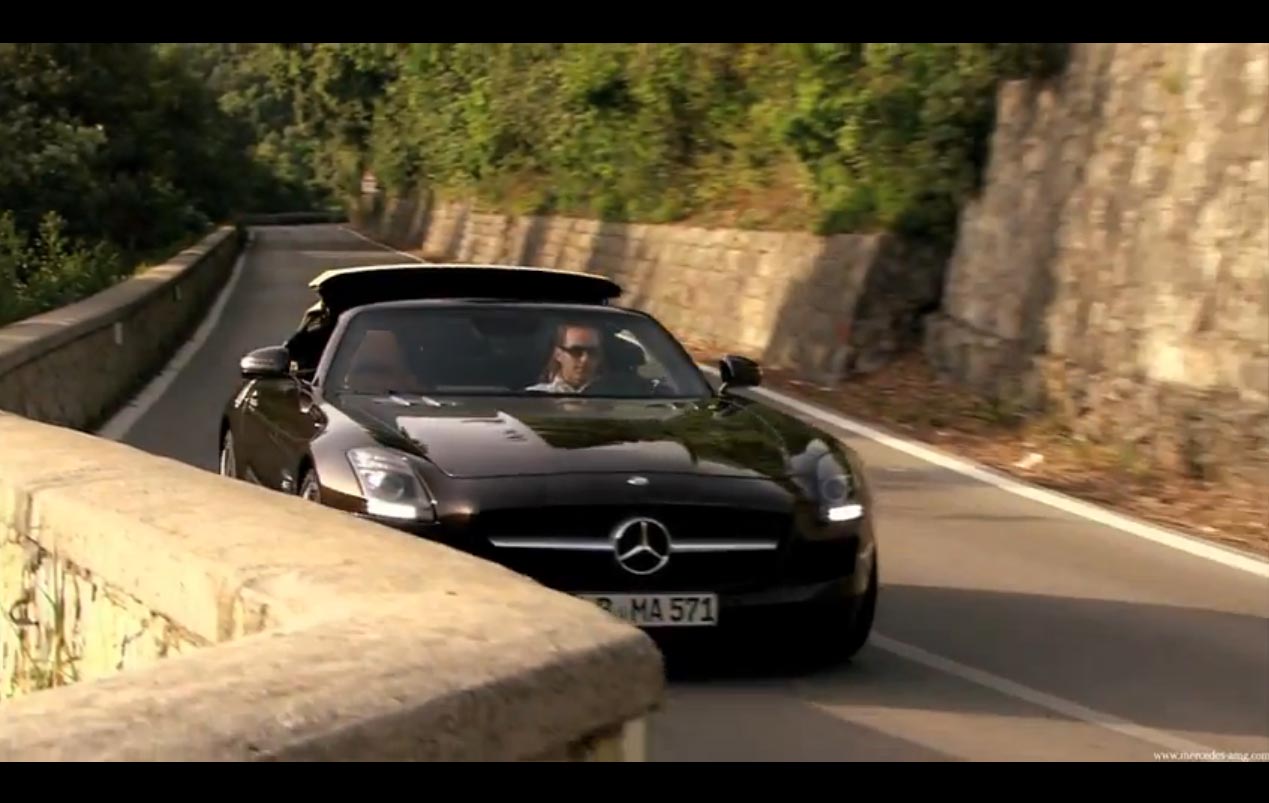
Official Video : Mercedes-Benz launches SLS AMG Roadster


Now the Mercedes-Benz has launched New SLS AMG Roadster and released the official prom-video.
Mercedes-Benz SLS AMG Roadster is boosted with a 6.3-liter V8 engine, with an delivering output power of 563HP horsepower and a 650Nm (480 lb-ft) of torque.
Transmission System : Seven-speed Dual-Clutch transmission.
Acceleration :
0 - 62mph [100 km/h] : In just 3.7 seconds and it can reach its top at 197mph [317 km/h]

The Price tag of Mercedes-Benz SLS AMG Roadster is around EURO 195,160 and it is going to be available in market from Autumn.

Please share your thoughts in the comments box....... ...!

Official Video : Mercedes-Benz SLS AMG Roadster


Please share your thoughts in the comments box....... ...!

Sunday, July 10, 2011

2011 Mercedes-Benz CL-Class

The sleek and attractive, exclusive events and cutting edge technology, highly modified 2011 Mercedes-Benz CL-Class underlines its flagship station in the world clean cars. Powered by a new 429-horsepower twin-turbo V8, which reaches 10-15% improvement in fuel economy and 23% improvement in CO2 emissions, CL550 4MATIC opens a new dimension to the effectiveness of the coupe segment luxury. This significantly reduces the achieved thanks to a new technology blue DirectShow third-generation spray-guided direct injection high-efficiency control of alternator, fuel pump, compressor and an improved control system. It 'also the use of low rolling resistance tires and the CL600, energy, optimized for Active Body Control system. In addition, Mercedes-Benz CL developers with state-of-the-art multimedia technology, which helps this model to maintain its position as the epitome of quality in its class.
 
2011 Mercedes-Benz CL-Class
The MY2011 CL-Class will make its U.S. debut in the fall of 2010.

A new generation of Mercedes-Benz CL-Class, Mercedes-Benz is to highlight the fuel consumption and exhaust emissions in this exclusive high-end segment. According to Chairman Dr. Dieter Zetsche of Daimler AG Board of: "CL is a perfect brand ambassador that combines a certain amount of things that characterize the Mercedes-Benz: A fascination with perfection ... and the responsibility and the new generation we went over, too - especially in terms of efficiency of the kingdom, but in terms of design, safety, comfort and power, too - CL indicates the direction: just follow the Mercedes. "

In the security field, a combination of advanced camera systems and radar-based support - unique in the segment of the luxury coupe - including innovation Lane Keeping Active Blind Spot Assist and active assistance system, makes the Mercedes-Benz CL-Class one "thought" partner of the driver. The modified Active Body Control (ABC) system with a crosswind stabilizing system and the Direct-Steer also improve safety and driving pleasure.

Design: a muscular presence of secure

The exterior of the new Mercedes-Benz CL-Class is characterized by the profile of the Bell brand, dynamic headlight grille V-shaped curve - the design details, which discreetly but effectively highlight the elegance of the lines and powerful car.

Presents three new front bumper air intake design accents with a chrome trim strip of the first floor. LED strip daytime running lights chrome frame is elegantly integrated in the middle of the brake cooling air opening. Standard Bi-active curve illumination, and support adaptive headlights, headlights offer state-of-the-art lighting. LED status indicators and sidelights around the car image and versatile rear of the vehicle features new taillights design.

New twin-turbo V8 engine with an innovative technology

The new generation of Mercedes-Benz CL-Class also assumes a pioneering role with its powertrain. Under the hood of a new CL550 4MATIC V8 biturbo blue DirectShow technology delivers impressive power. With its 4663 cc displacement, the engine produces 429 hp eight-cylinder, despite the displacement of 0.8 liter less, it is still about 12 percent more powerful than its predecessor, which had a capacity of 382 ch. Simultaneously, the torque increased from 391 lb.-ft. to 516 lb.-ft. - a 32 percent increase. The new engine achieves a 10-15% improvement in fuel economy and improvement of 23% of CO2 emissions. The CL550 4MATIC requires just 4.9 seconds to accelerate from zero to 60 km / h. (Previous model: 5.4 seconds). Summary: The CL550 4MATIC is much more nimble, torquey and economical than its predecessor.

The technology package of DirectShow blue V8 biturbo contains a number of new developments, unique in their combination. It is worth mentioning them is guided by a stream of third-generation gasoline direct injection with piezo injectors, multi-spark ignition with up to four spark plugs in a millisecond. In addition both the possibility of a combustion process innovation is called "split uniform." Other factors contributing to low fuel consumption remain constant use copies of friction optimized pistons, piston rings and cylinder barrels, control at the request of the oil pump and the new three-phase thermal control in the circuit cooling. The luxury coupe also controls the generator, depending on the type of conduct and on-board voltage. The kinetic energy is recovered in overflow mode.

CL600, the 510 hp 12-cylinder bi-turbo engine and 612 Nm. Torque is a top-of-the-line model is a luxury sports car accelerates from zero to an incredible 60 mph 4.5 seconds.

A unique combination of driver assistance systems

CL-Class 2011 further strengthened its position as a masterpiece of automotive platform and technology, with the help and the most advanced security systems. These wizards very keen to transform the court into a "think" partner who can see, feel and react immediately if it detects an obstacle, act independently to prevent accidents or mitigate their effects. The driver assistance systems as a pioneer in the Mercedes-Benz CL-Class is based on the state of the art radar, cameras and sensors.

Active Lane Keeping Assist is a new security feature made its debut on the Mercedes CL-Class in the driver assistance package as an option. If the vehicle threatens to cross a railway line marking continuously, the system activates an electric motor in the wheel, vibrating the map - giving the driver a discreet but effective warning hint to counter the tea immediately. The active system jumps into action, if Mercedes inadvertently cut through a railway line continuous marking on the right or left. In this case, the car gently intervenes by braking the wheels on the opposite side of the car and helps the driver stay on course. Active Lane Keeping Assist is built on existing Electronic Stability Program ESP ® program.

Lane Keeping Assist assets evaluating information provided by a camera mounted inside the windshield. Identifies the contrast between the road surface and lane markings. In addition, the radar scans the roadside optional separators and other pavement markings. The system also evaluates the actions of the driver and reliably determine if the car is at the beginning of the track, intentionally or not. For example, there is no warning if the driver accelerates hard right before you go or when accelerating on the right track, or hard braking in a curve or angle.

Brake targeted: Active Blind Spot Assist

Another innovation Mercedes-Benz offers a Mercedes-Benz CL-Class is Active Blind Spot Assist, which uses a multi-stage design of a warning. If the system detects a lane change would be too dangerous, warns the driver by displaying a red triangle exterior mirror. Close-range radar sensor to monitor the area immediately to the side and rear of the car. If the driver ignores this warning and use the turn signal, for example, the audible sounds. If the driver continues to ignore the warnings, and comes dangerously close to the vehicle in adjacent lanes, the system works: the corrective action of brake ESP ® was applied to the wheels on the opposite side of the vehicle. This causes the car's yaw movement about the vertical axis, due to the uneven distribution of braking forces.

If an accident still can not be avoided, the system activates Blind Spot Assist can reduce the consequences of a collision by braking control.

Assistants to see and be seen better

Adaptive Beam Assist is standard available from Mercedes-Benz CL-Class. This camera-based system to identify oncoming vehicles or vehicles on their lights, and thus facilitate the transition to the high bars, beams of light to create the best possible conditions without dazzling other drivers. In addition, Mercedes-Benz offers the optional Night View Assist Plus Mercedes-Benz CL-Class, special offers, an infrared camera to detect pedestrians: Pedestrians are now explicitly highlighted in the display, to help warn motorists of low lighting.

European models, the images provided by the head-mounted camera using a new speed limit Assist option (not available in the U.S.), which recognizes speed limit signs of passage, and shows a speed limit on the big screen and a display system navigation map.

A new generation of the CL-Class Mercedes-Benz has also improved long-and medium-range radar used by Brake Assist (BAS PLUS) and DISTRONIC PLUS proximity control cruise.

An "electronic crumple zone", the system PRE-SAFE ® Brake

Mercedes-Benz offers a second radar system as part of a package of assistance luxury coupe driver: PRE-SAFE ® brake automatic emergency braking. If the driver is distracted and does not recognize the imminent danger of collision or a warning sign, and the care system, PRE-SAFE brakes can be addressed independently and apply partial braking. If the driver does not react, even if the automatic partial braking, this is a new version of PRE-SAFE ® Brake activates the maximum braking effect, the pressure of about 0.6 seconds before the collision inevitable - it is an operation emergency braking can significantly reduce the severity of the impact. PRE-SAFE ® brake is thus a sort of "electronic crumple zone".
 
2011 Mercedes-Benz CL-Class interior
ATTENTION ASSIST warns sleepy drivers

Drowsiness is one of the most common causes of accidents. It is for this reason that the Mercedes specialists have developed ATTENTION ASSIST, which is part of standard equipment for the new Mercedes CL-Class. The system constantly monitors more than 70 different parameters, in order to detect driver fatigue and give a warning before dangerous micro-sleep phase begins. Please note the driver's steering proved to be particularly strong evidence: several years of practical research, Mercedes-Benz has shown that sleepy drivers to make small steering errors which are often very characteristic way very quickly. This guide is recognized as a specific steering angle sensor. Please note the driver's eyes are not always conclusive evidence of sleep, because many drivers can experience a micro-sleep eyes open.

Active Body Control reduces the effect of wind

The Mercedes-Benz CL-Class also meets the highest standards in terms of driving dynamics and agility. Thanks in part to Direct-Steer, which can vary the steering ratio based on steering angle, and modified Active Body Control (ABC) crosswind stabilization (standard on the CL600, CL65 AMG CL63 AMG) . This last step in the development of active body changes the distribution of the burden of wheel spacers Spring ABC in milliseconds (depending on the direction and intensity of the crosswind) to help offset the forces of wind through of.

Suspension Active Body Control - which introduced a new dimension of driving dynamics in the previous Mercedes-Benz CL-Class in 1999 - is unique because it applies not only to roll, but the pitch and squat movements and , ensuring a perfect harmony of comfort and handling stability. Since the introduction of this innovative system, the engineers in Sindelfingen have continuously improved, so eleven years later that always marks the pinnacle of automotive engineering. In addition to the crosswind stability, suspension of new features optimized hydraulic pump that takes the load of the engine, which helps reduce fuel consumption.

Additional safety and agility in fast driving is provided by the brake Torque Vectoring standard in new CL-Class - targeted unilateral intervention braking the inside rear wheel when cornering. This allows the luxury coupe to be running fine control with even greater agility.

Information and entertainment on board: the most advanced multimedia technology

In keeping with his character serene and sophisticated technology, including Mercedes-Benz CL-Class sets standards for embedded infotainment. The latest innovation, technology SPLIT VIEW is available for the COMAND system in the center of the center console. This innovative display concept makes it possible for the driver and front passenger to see different content simultaneously on the same screen. For example, a driver using a navigation system based on cards in the front seat passengers watch a DVD.

Standard COMAND control and display system with Bluetooth ®, USB and SD card interface allows customers to export stored data to other vehicles and multimedia devices. It is also possible to transfer and update the navigation data. Mercedes-Benz integrates media interface - an interface for portable audio and video devices - via an optional cable located in the glove box. Standard equipment includes audio radio, a 6-disc CD / DVD player compatible with MP3, EQ with volume control speed-compensated and 7.2 GB of music registry that stores about 2,500 digital music files in MP3 format, AAC or WMA. The system recognizes the music files playable on CD, DVD or music from the registry using its database Gracenote ® database, and displays the title, album and performer in the color display. New music search function allows passengers to browse the SD memory cards, USB sticks, CDs and DVDs for music titles and artists specific.

The standard navigation system features a national map of the system stores 40 GB hard drive, which allows a very fast route calculation. Another factor is the ease of navigation, high detailed map of 3D display, SIRIUS real-time traffic information.

The standard voice command system allows the driver to operate the navigation equipment, telephone and audio input via the whole word - which means that the driver no longer needs to clarify its orders, but simply to pronounce the whole word when you enter destination, select a radio station or a music title from the directory of music, or when you call a name in the directory.

Co-developed by Mercedes-Benz and Harman Kardon ® surround sound system with Logic 7 ® Discreet technology provides excellent performance with a three-dimensional.

Interior: carefully selected materials and superior finishing

In the cabin, also Mercedes-Benz developers and designers perfected the Mercedes-Benz CL-Class, very attentive to details. A total of four different types of precious wood opens up opportunities for material well suited and concepts of color: a choice of bright light or dark walnut, black ash and shiny brown poplar CL600. Important Note: In line with the corporate philosophy of Mercedes-Benz of sustainability, using Mercedes-Benz CL-Class only European wood from sustainable forestry sources. Most of the wood components are handmade and individually matched for color and grain of experienced craftsmen.

The materials found in the new CL-Class seats are the finest quality. There is a choice of four color combinations for the vehicle like: black premium leather, premium leather savanna / cashmere, Ash / Gray premium leather, sahara beige / premium leather black.

Multi-function wood / leather steering wheel and the Mercedes-Benz CL-Class has also been changed for Mercedes-Benz designers: the RIM and the air bag is lined with soft nappa leather is standard. New, more compact airbag also lends a touch of sportiness to the multi-function leather / wood steering wheel sophisticated double-stitched seams.

Apart from this, Mercedes-Benz is the use of light as a style element inside the vehicle. Standard ambient lighting provides a choice of three lighting modes: solar (amber), neutral (white) and polar (light blue).

Tradition: an exclusive line of his ancestors

The new generation of the CL-Class continues the great tradition of cutting Mercedes-Benz, which dates from the late legendary supercharged cars of the 1920s and '30s. Since the 1950 Mercedes-Benz has produced a steady stream of exclusive two-door car that combines sophisticated design with cutting edge technology - each a classic model of the car. The model series W 188 S 300 Coupé - which went into mass production in 1952 - was the beginning. A report is now called the "measure of what can be achieved in the automotive industry."

This opinion has remained faithful to all the following models to the current Mercedes-Benz CL-Class, Mercedes-Benz luxury coupe present - with the exception of their timeless design and a high level of comfort - a revolution in automotive technology. This was the case in 1961 220 SE Coupe was the first mass-produced Mercedes-Benz equipped with disc brakes. In 1995, the Electronic Stability Program ESP celebrated its world debut at S 600 Coupe C140 is a model of the series, and in 1999, the active control system of the body of the suspension was introduced in the model series C215 CL-Class . Technological innovation PRE-SAFE ® Brake debuted a large coupe Mercedes-Benz. Now, two new developments in the 2011 Mercedes-Benz CL-Class, Active Lane Keeping Assist, Active Blind Spot Assist, helps prevent accidents or reduce their severity.

2011 Mercedes-Benz C63 AMG DTM Safety Car

2011 Mercedes-Benz C63 AMG DTM Safety Car Review

New Mercedes-Benz C63 AMG is used as the safety car in the 2011 DTM season. After the presentation of the DTM in Wiesbaden 10 April 2011, the new safety car made its debut in May 1, 2011 the opening round of the German Touring Car Masters at the Hockenheimring Baden-Wurttemberg. V8 Sports Saloon has been only slightly modified to make it a challenging task DTM. Responsibility for the development and production of the Mercedes-Benz C63 AMG safety car was entrusted to experts in all AMG vehicles, the development department and the AMG Performance Studio.
 
2011 Mercedes-Benz C63 AMG DTM Safety Car
Decisions on the deployment of the safety car made by Deutsche Motor Sport Bund (DMSB) - governing body of motor sport in Germany - who takes responsibility for the implementation of security and compliance and the performance of official duties Sports in accordance with the rules of DTM. Controlled racer Jürgen Kastenholz (43), Mercedes-Benz C63 AMG safety car has the task of ensuring maximum safety for riders and spectators in the event of dangerous situations such as severe weather, accidents or other incidents. When the radio from stroke, the safety car is positioned at the head of the DTM field and cars looking around the track until normal racing can resume.

The new Mercedes-Benz C63 AMG is used for the 2011 DTM season scales new heights in terms of design and technology: the AMG 6.3-liter V8 has an exceptionally high production 358 kW (487 hp) and maximum torque of 600 Nm. The increase in production compared with the standard 336 kW (457 hp) is due to the AMG Performance package, which is optional for all models C63 AMG and allows the car accelerates from 0 to 100 km / h in 4, 3 seconds (4.4 seconds Estate). AMG Performance Package for the engine specialists have put their trust in the transfer of technology from Mercedes-Benz SLS: forged pistons, connecting rods and crankshaft, the light was taken from the gullwing model. The low inertia of the components of three kilograms lighter allow naturally aspirated eight-cylinder engine to rev freely and respond faster.

The complete performance characteristics include variable intake manifold, titanium gray and the AMG high-performance braking system with composite brake discs at the front. 
2011 Mercedes-Benz C63 AMG DTM Safety Car
AMG Speedshift MCT 7-speed sports table

New equipment includes AMG Speedshift MCT 7 innovative sports gearbox which includes a start-up wet clutch and four transmissions and dual functions start and trip RACE for optimum driving dynamics. Peculiarities of the current model includes aluminum hood with PowerDome altered, the new grille, new headlamps, new AMG rear apron with black diffuser insert and feature active rear-axle cooling. To maximize the contribution of the radiator, front apron AMG DTM safety car features enlarged openings and side vents, while the AMG spoiler lip in carbon fiber on the trunk lid reduces lift at high speed track . According to this view, also the AMG DTM Safety Car outside sport mirrors carbon fiber.
 
2011 Mercedes-Benz C63 AMG DTM Safety Car interior
With exceptional drive and differential lock three floors of the ESP ®

The coil-over suspension with adjustable differential lock and 3-stage ESP ® offers a high level of agility and great grip on the racetrack. The Mercedes-Benz C63 AMG DTM Safety Car is footwear with multi-AMG light alloy, painted matte black with a bright, high rim of the tire, tires 235/35 R 19 front and 255/30 R 19 rear tires.

AMG high-performance braking system is optimized for the track: the composite brake discs, six-piston front brake discs and steel shaft with four-piston calipers on the rear axle, all discs are internally ventilated and perforated. At the same time, the AMG sports exhaust system with a special rear silencer provide unmistakable AMG V8 sound.

Characteristics of the safety car on the DTM AMG C63 series includes feature logos DTM safety car, LED lightbar on the roof and the flashing strobe LED on the front and rear. A license plate with LED lit and the "Safety Car" the words on the tailgate make the car easier to see in bad weather. To facilitate communication with the race director, the safety car equipped with a radio and a TV screen. AMG sports bucket seats two with four-point belts provide perfect lateral support for the pilot and copilot, while the AMG performance steering wheel in nappa leather / Alcantara with shift paddles ensures optimal vehicle control.

2011 Mercedes-Benz C-Class 520 DR

2011 Mercedes-Benz C-Class 520 DR Review

Mercedes-Benz Spain has launched a new exclusive model, the Mercedes-Benz C-Class DR 520 with more power and performance than any other C-Class. Only 20 units of this car will be available and is sold exclusively through the company's products specialist in the division of Mercedes-Benz World at Brooklands, Surrey.

Based on the high performance C63 AMG, Mercedes-Benz C-Class 520 DR has improved performance and provides 520 hp and 650 Nm of torque, a 60 HP and 50 Nm over the advantage that the standard C63 AMG . The Mercedes-Benz C-Class Sedan DR 520 can reach 0-62 mph in just 4.1 seconds for the sequence to achieve the same in 4.2 seconds, and both are electronically limited to a maximum speed of 187 mph.
 
2011 Mercedes-Benz C-Class 520 DR
The AMG Performance Pack Plus is mounted on Mercedes-Benz C-Class 520 DR standard and features of the AMG high-performance braking system with red calipers, with the addition of upgraded engine in the form of pistons forged, newly designed connecting rods and crankshaft revised and AMG rear spoiler in carbon fiber for the sedan.

Available in black or matte white wrap and complimented by alloy wheels with titanium finish, grille and discreet DR 520 badging on the fender and tailgate, Mercedes-Benz C-Class 520 DR combine the stealth aspect with powerful performance.

Inside, sports seats covered in leather and Alcantara only finished with a contrasting red stitching and white, as in the dashboard and upper door panels. The multi-function steering wheel is dressed Performance AMG nappa leather and Alcantara.
 
2011 Mercedes-Benz C-Class 520 DR interior
Nigel Unsworth, Director of the Division Product Specialist, said: "We wanted to launch Products Division specializes something unique - and Mercedes-Benz C-Class perfectly meets DR 520 Mercedes-Benz World at Brooklands is situated, and is a proud history. "Promotions Brooklands" that are sold here over the years, Mercedes-Benz C 520 -. DR is estimated at Dyno-520 hp - is our chance to create an exclusive model in the UK is a fantastic opportunity for us. to offer our customers who love sports cars and supercars to measure with more performance than the already very successful C63 AMG. And as well as increased performance, it seems incredible, too. "

The Mercedes-Benz C-Class £ 9,995 DR 520 costs for the C63 AMG standard price, so that R & D 520 Saloon and Estate € 62,430 OTR OTR £ 63.680. The cars are also supported by a period of three years, mileage 60000.

2011 Mercedes-Benz Concept B55

Mercedes-Benz W55 Concept

Spacious, innovative and safe, compact models of the Mercedes A and B class with their high-score feature, and found with over 2.5 million customers as a result. Only an extraordinary example was built at the factory in Rastatt, and shows the class B in a new light: a B55 with a V8 engine and rear wheel drive.

The idea came to Rastatt Plant Manager, Peter Wesp. He gave some of his staff the task of creating a car very special Class B - but leave the creativity to decide what and how. Andreas Wurz, director of technical training, they immediately accepted the challenge. It took a very careful with this great compact design, he used a tape measure and came up with the idea that not only surprised and delighted his boss and colleagues, but also for apprentices, "In fact, you can install a V8 in the engine compartment. "
 
2011 Mercedes-Benz Concept B55
With colleagues from Matthias Rieger-manager of the section electrical / electronics, he assembled a team of twelve second year and third year students specialize in automobile mechanics and mechatronics.

A specification was developed:

* The spatial concept of the class B remains unchanged.

* Outside, too, was there to be only small indications of the work of conversion.

* The interior has been enhanced to meet the new class of vehicle being produced.

* The result of the conversion was largely suited to everyday driving.

HR, Martin has promised financial support Spicali, so the project a viable proposition in the first place. And a "victim" (Wurz) for the conversion was also found quickly: A, B 200 CDI, which was anyway a delegate to the training workshop for learning. While students completely disassembled the car, Wurz was in search of a suitable engine and found what he seeks. And make no mistake: the 5.5-liter V8 that develops 285 kW (388 hp) and 530 Nm of torque was transplanted in Class B with a seven-speed automatic transmission and engine control unit. The latter proved to be a headache later, as he had to be only to process signals from the rear axle.
 
2011 Mercedes-Benz Concept B55
Wurz: "The power unit mounted V8 engine very well, and were even able to use the original engine mounts." There were serious problems with the administration, but again, the harmony has been restored with a series of changes. The exhaust system was a clever combination of various elements of spare parts, and took the form of a double tube emerging in the center of the back. This is where the only known B55 receives its typical its murmur - once the ignition key is turned every head in the area are guaranteed to turn simultaneously in the direction of the Class B

Intensive reading parts catalogs has also solved the problem of transplant second largest, that is, the drive axle in the rear. Apparently, the rear axle of an old E-Class series of 210 W is a very good geometry. Wesp plant manager gave the green light to enter, and Wurz and his colleagues designed a rack that extensive training and welding can be integrated in the class B of the body to receive the rear again. Elegantly hidden in the sandwich floor, the axis of the E-Class is also installed in Class B, without further modification.

It breaks the team also struck gold in the parts list, this time, C32 AMG listing. Perforated, ventilated brake discs measuring 345 x 34 mm were planted in the front, drilled and ventilated disc brakes 300 x 30 mm rear. System combined with an amazing 8.5 x 18 five-spoke AMG wheels shod with 235/40 ZR 18 tires sport designer Y in 9 x 18 front and 255/35 ZR 18 tires wheels Y-back. Maximum steering angle is limited to the front axle to fit. The team used a typical target range of the tuner means of suspension, the installation of a coil-over suspension of D & W.
 
2011 Mercedes-Benz Concept B55 interior
When the interior was concerned, friends, training seminar, Sindelfingen, we were able to help, offering Alcantara, B and C pillars and roof lining, at the same time, a luxury material. Seats in leather / Alcantara combination were specialists at Johnson Controls, which are in place in Rastatt. Finishing has been added to B55 in the Rastatt plant paint shop. Trendy white with dark-painted radiator grille and headlights smoked glasses, Class B, cuts the imposing figure, but provides only a discreet sign PowerPack hidden under the hood.

The project is led by the foreman Wurz is particularly proud that 1620 kg, the weight of B55 is only about 180 kg more than the original car. This means that an impressive performance figures can be expected. Wurz: ". We have not made any measurements yet, but we need to manage a sprint to 100 km / h in under six seconds"

Factory Manager Wesper are also proud of the result: "The team of students has done a fantastic job and focused on the sporting genes of the class B than anyone could have imagined." Manuela Rasche Training Manager is also satisfied: "The B55 shows that our workshop can do and at the same time it clearly shows that we not only offer young people high-quality, professional training, but also very unusual and exciting project .." Could it be that other projects of this nature are planned for the future? Rasche, "We may be surprised ..."

2011 Mercedes-Benz E-CELL A-Class

2011 Mercedes-Benz A-Class E-Cell Review

After the B-Class F-Cell fuel cell car, now Mercedes-Benz presents the new Mercedes-Benz E-cell as the second electric car built in conditions of mass production. The five-passenger battery-electric drive meets all requirements for a family car for everyday use. It is based on the five-door version of the current Class A and has a generously sized interior and trunk for maximum versatility. No compromises were necessary in terms of space and variation, with piles of compact storage that are placed very well protected and in a little space in the vehicle under the chassis. The two high efficient car lithium ion batteries offer a range greater than 200 km (NEDC). The car is powered by a quiet, emission-free power at the local level with a maximum power of 70 kW (95 hp) to develop high torque of 290 Nm traveled a total of 500 Mercedes-Benz E-Class cars will-CELL constructed from the fall of 2010 Rastatt.
 
2011 Mercedes-Benz E-CELL A-Class
The vehicles will be leased to selected customers in several European countries including Germany, France and the Netherlands.

Five doors, five seats, the boot volume as the combustion engine A-Class (435 to 1370 liters), a payload of 350 kg measured in accordance with EC Directive and the great variability within and trunk: this is what makes the new Mercedes-Benz E-CELL a family car for everyday use. The sandwich structure provides advanced both extreme comfort in a car and maximum protection for passengers and components in the case of a collision.

"Throughout our history some 125 years, we have accumulated extensive experience and expertise in the field of electric vehicles, both battery and fuel cell technology This experience has already provided the basis for two cars for the daily use of electronic street. Smart fortwo electric drive, and Class F CELL. The story continues now our third electric car, Mercedes E-CELL, a start of production is planned for autumn this year. The new car is to Battery electric Mercedes to expand its product portfolio and provides customers with driving pleasure, comfort and security they expect, "says Dr. Thomas Weber, Daimler AG Board of Management responsible for Group Research and Development of Mercedes-Benz Cars.

Driving with zero emissions

Together with exemplary safety, comfort and a high suitability for everyday use, the Mercedes-Benz E-CELL also offers other strengths are not always found in today's electric cars: agility and driving pleasure. They are based on a low priority, partly due to the installation of the batteries in the cabin, and the structure of "sandwich" floor of the vehicle. This gives the car excellent to drive, fun to drive and features - features that are clearly class-E-CELL separately from other electric cars, which are often heavy and bulky batteries are located in the trunk or back. Another advantage of this mounting position is to provide the best protection possible to penetrate structural components in the event of collision or impact of guarantees. This is because the batteries located outside the zones of deformation of the body.

High stability properties of the sandwich structure of the floor is also to provide excellent protection for the battery and the passengers from side to side collision scenarios.

Efficient use of electricity over long distances

The electric drive of the Mercedes-Benz E-cell is a permanent unit field synchronous develop a peak power of 70 kW (95 hp) continuous power of 50 kW (68 hp) and a high maximum torque of 290 Nm , as expected for an electric car, which is available from the first revolution. This makes the Class E-CELL an artist unique, secure and dynamic on the road, with only 5.5 seconds to accelerate from zero to 60 km / h. Kick-down function is used to provide maximum acceleration, according to the current charge level and temperature of the battery. Top speed is electronically set at 150 km / h.

Storage devices of energy are high performance lithium-ion technology-based high voltage. The advantages of lithium-ion batteries include their compact size and efficiency significantly higher compared with the nickel-metal hydride (NiMH). They offer an energy density of 30 percent over NiMH technology, and power density of 50 per cent more. Other benefits include high efficiency of loading and longevity. The total energy of the two lithium-ion batteries are a total of 36 kWh. With fully charged batteries, the Mercedes A-Class F-CELL a range of over 200 km (NEDC).
 
2011 Mercedes-Benz E-CELL A-Class
Efficient cooling of the battery

Special thermomanagement system to maintain the high voltage of the batteries are cooled to the desired temperature inside the box. Cooling system is based on low-temperature cooling circuit. Liquid coolant water-glycol mixture to ensure stable operation at a temperature of storage media with high energy efficiency and longevity. Extremely high temperatures, the battery cooling system enhances the cooling system of air conditioning. Electric, and two on board chargers are cooled high-temperature cooling circuit. This circuit to keep the unit of work to optimum operating temperatures for maximum power delivery system. Power electronics for cars provide a 12-volt automotive electrical system through a DC / DC converter with high voltage electricity from the system.

The electronic system also controls other functions, such as heating and air conditioning to reduce the load on the battery for this purpose.

Flexible withdrawal options

Batteries to Mercedes-Benz A-Class E-Cell can be integrated from both a public charging points or connected to household power waste. Wide range of charging options are available, including single-phase 230-volt outlets, three-phase electrical outlets for domestic box wall, and a public charge. Using a single-phase 230 volts, it takes about eight hours of charging time required to accumulate the energy range of 100 kilometers (NEDC). This time, only three hours to be deducted, if the point of charging wall-box or on the road charging.

Daimler and a number of other European manufacturers and energy companies have agreed to load the plugs and sockets standard, with the ultimate goal of global standardization. This makes the technology easier to use, and is considered an essential prerequisite for the rapid spread of electric mobility.
 
2011 Mercedes-Benz E-CELL A-Class interior
Intelligent load management

Because the smart fortwo electric drive in its class, the Class E-CELL is the world's first vehicle in its class to be equipped with a system of intelligent load management based on the "SmartCharge Communication" is the theme. By car electronics, all relevant information - such as identification data of the electricity supply contract - is exchanged with the loading point. Benefits include a practical way, the billing system simple and reliable.

Other smart features include a pre-start ventilation car. While the Mercedes-Benz A-Class E-Cell Batteries can be recharged at home or on the charging point, interior can be preheated or cooled, and the driver set. Another feature allows the driver to check the progress of the download and, therefore, the range is currently available via the Internet or a smartphone, for example.

Mercedes-Benz E-CELL electronic download tasks also provide proactive monitoring. So if the electric car has been parked for a long time, the download may be set to occur at times when electricity is cheaper, for example, during the night. Smart user interface, class E-Cell offers a variety of billing functions, control and monitoring, the electrical mobility of a comfortable and safe, and then a customer friendly. The vehicle is immobilized automatically connected to the power charging cable and the ability to prevent accidental escape when a download is in progress. This makes the task of recharging even easier and safer for the user.

"All of control," while on the road

To enable the management of vehicles and management easier, safer and more transparent as possible for the driver, the Mercedes-Benz E-CELL has its own control and display concept has been designed specifically for the needs of the electric car. Multi-vehicle display shows battery status, mobile data, such as mileage, travel time, average speed and average fuel consumption and the rest of the range and the remaining capacity of electricity (SOC = state of charge).

Another feature of the system is an exhibition of the engine power available today. Meanwhile, the tachometer can usually be found on the instrument panel replaced by an indicator showing the momentary drive demand for energy recovery or power. Green, white and red color segments indicate if the drive is currently operating in the economy of the tax or accent.

Teams of high class Mercedes

The new Class E-CELL has a lot to offer in terms of quality Mercedes-team. Emphasizes the standard of quality "AVANTGARDE" premium for this innovative electric car include bi-xenon headlamps, COMAND APS system, help a fleet of active stations and automatic THERMOTRONIC automatic climate control. A further special feature is the ability to set the indoor temperature during loading, ie, raise or lower the temperature of the chamber, depending on weather. The car has a full range of security features, including rear and side bags, and sophisticated seating and lighting packages.

External characteristics of the battery electric vehicle includes the standard silver body paint and a polar "E-CELL" sign in silver letters on the boot.

Highest standards of safety

Mercedes-Benz to introduce the same high safety standards for Class E-CELL to all other series-produced vehicles. The electrical system has shown a readiness for series production in large testing programs practical. The main components are shown in the Mercedes-Benz fuel-cell vehicles, for example, the Mercedes engineers to leverage the experience of more than 4.5 million miles of testing for everyday use. Describes the concept of integrated security features of the innovative control system of the vehicle. Lithium-ion and high-voltage system, Mercedes-Benz A-Class E-CELL is protected by a comprehensive concept of security:

* All cables are clearly color-coded, and safety warnings are placed in high-voltage components.

* Good insulation companies and special connectors for the protection of full details of the entire system.

* An electronic controller continuously monitors the safety requirements and immediately alerts the driver of any system fault lines.

* All high voltage components are connected in an electrical circuit. This means that the high voltage system is completely switched off automatically in case of breakdown or accident.

* High-voltage system is automatically switched off completely when the power switch is set to "Off" position, or if any defects.

* The control system of permanent short circuits.

* Automatic Disabler is activated when the cable is plugged to prevent the possibility of a car being taken away by mistake.

Modular system for electric vehicles

According to the strategy used for the development of a hybrid, Mercedes engineers have also developed a modular system for battery electric vehicles and fuel cell technology. The benefits include efficient use of common parts for all brands of electric vehicles. All the main parts of electric cars suitable for modular design - for example, electrical and Mercedes E-CELL is also used for B-Class F-CELL. As well as energy storage units by e-Class is the same battery electric smart fortwo.

2011 Mercedes-Benz Concept A-Class

2011 Mercedes-Benz A-Class Concept

In 1993, Mercedes-Benz ventured into a completely new vehicle category with the revolutionary concept of Vision 93 Now the brand is once again presents a car that could come from another planet: the Mercedes Concept is the first impulse of a new generation, whose design means focusing on the expressive dynamism. Mercedes-Benz A-Class concept celebrates its debut at the Shanghai Motor Show (21-28 April 2011). Technical characteristics of this front-wheel drive concept is a new turbocharged four-cylinder petrol develops 155 kW (210 hp), dual-clutch gearbox and radar-based collision warning system and the Adaptive Brake Assist.

A long hood, low profile and thin areas of the window: the proportions of a class-concept is synonymous with dynamic focus. Its sporty appearance is given particular depth of the interaction between lines and surfaces. "The Concept A-Class introduced the new design idiom of Mercedes-Benz in the compact class with a sculptural interpretation of the light and expressive," says Gorden Wagener Professor, head of design at Mercedes-Benz. "We use the term "energy bomb" to express the great dynamic off a class-concept. Our sources of inspiration were formal, wind and waves, and aeronautical engineering, resulting from this 'cool'. "
2011 Mercedes-Benz Concept A-Class
But it is not only visually, but also technically and Mercedes-Benz A-Class Concept is a compact, begins a new era in the Mercedes-Benz. This front-wheel drive model is powered by a four-cylinder gasoline engine with the new M270 series. And 'cross designed for installation, and thanks to direct injection and turbocharger provides high performance potential with minimal emissions and fuel consumption. Other highlights of the all-aluminum engine features an injection pressure of up to 200 bar and respond quickly to the piezo injectors.

The concept of Class A is equipped with two-liter version of the new engine that develops 155 kW (210 hp). This unit is combined with Mercedes-Benz BlueEFFICIENCY dual-clutch transmission. As a three-axis transmission, which has seven gears are changed automatically without interruption of power energy. The new transmission is particularly economical, sporty and comfortable.

The exterior design with sharp edges and a free game with body surfaces

An important feature of the new Mercedes-Benz idiom is the interaction between the expressive lines and surfaces - as designers call a "pure" concept. Thank you to concave and convex surfaces with light modulation that results, creating a unique sculpture like presence. The Concept A-Class continues this theme by categorically edges and surfaces defined interaction, such as Mercedes-Benz first demonstrated in the style F800. The side view is composed of three lines leading from the front edge structure forming a line down back, while the pronounced shoulder muscle on the rear axle of the car coupe-like character. Another line up in front of the rear wheel in a curve scan. These lines give more depth and dynamic side profile. The door handles are recessed into the door and come electrically at the push of a button.

Unusual, wing-like structure outside mirrors must be reflected in the flow and lightness. Another important feature is the open side skirt, creating an original lighting and shading effects. Remember the turbine rotor, a large 20-inch wheels reinforce the impression that Mercedes-Benz E-Class concept has been shaped by wind.

The front end of Mercedes-Benz Concept A is a real real attraction. The logo of the brand seems to be surrounded by a starry sky. Where there are usually openings or louvers, grille consists of a wide range of metallic silver "points" on the black stems. This theme is reflected in the design of the wheels.

Visually, the great strength back and oozes sportiness, and is also a lively interaction between the convex / concave and pronounced edges. Taillights follow the lines of muscular shoulders and back, emphasizing the breadth of their car horizontally. Aerodynamic spoiler in the rear lights to improve efficiency, while the diffuser creates downforce to support the communication.
2011 Mercedes-Benz Concept A-Class interior
Interior dominated by associations with the aviation engineering

The interior of the Mercedes A-Class Concept, which is flooded by light from the large panoramic roof, also appears to be from another planet. Several unusual features were inspired by aviation, while reflecting the ideas of "Mercedes-Benz Aesthetics 2" sculpture inside. Groups are minimized, for example, the dashboard and center console are just brushed aluminum structures. The result is a transparent, lightweight design effect bionics.

As a very striking feature within the concept A-Class, in the form of panels of an airplane wing and a translucent, elastic textile lining. Thank you for this sophisticated substance which is vapor coated with particles of chromium, the cellular structure of bionic dashboard is still visible - its design reminiscent of a fabric-covered aircraft wing, if the spacers in predicate are significant. Dramatic backlighting makes the instrument carrier seems especially futuristic. Thank you for the transparent management of high-tech coating, and the absence of a conventional support structure, the panel appears to float. Lines continue in the door panels as vapor trails of jet wings.

Shaped vents in the dashboard is also inspired by the engines of a jet. The translucent, backlit vents change their color depending on temperature, the residents selected for the climate control system: they are blue, cold, fresh air is directed inward, but the red if the flow air is heated. The poster player in the instrument cluster, which was inspired by the afterburner of a jet engine, is also red. The central control system is designed as an aircraft panel with a high-tech gear stick as a "control of the stack." With their molded headrests and very pronounced lateral support, call the headquarters seat the pilot of a jet fighter in mind.

Titanium and silver tones are combined in a lightweight, elegant beige interior. Magenta produce stress that, unlike a car paint silver alubeam, which follows the dynamic forms, such as liquid silver exterior.

The Mercedes-Benz concept of using modern materials, such as high-tech coating on the dashboard, leather or metal, which is semi-aniline dyed with metallic pigments and nubuck leather design and quality. This builds a bridge between the tradition of 125 years of Mercedes-Benz and its claim to progressiveness.

Comand Online innovative design offers ease of use graphical applications for smartphones

A smartphone is fully integrated into the operating system of the Mercedes-Benz concept. When the phone is inserted into the slot in the center console, it is automatically synchronized with the multimedia system COMAND. All functions of your smartphone, including Internet radio, e-mail and social networks like Twitter and Facebook, are presented as applications 17.8-inch display and can be operated via a rotary knob / button.

The items appear on the screen is a unique, deep, created by the three-dimensional laser-like, yellow lines. This is close to the series show a concept designed and built for designers and engineers developing Mercedes-Benz lab in Palo Alto / USA. Menu Concept Mercedes-Benz A-Class are both Mandarin and English.

2011 Mercedes-Benz Concept A-Class
Projectors with fiber optics produce a unique effect on

Just create a special effect lights, Mercedes-Benz concept of class, innovative, high-performance full-LED headlamp grille another reason to heaven with a number of light points. Daytime running lights consisting of 90 optical fibers with aluminum sleeves, and are arranged in the form of wings inside the projector. Tentacle-like shape of the individual fibers spread of light sources to create a dramatic contrast between the soft and hard.

From any perspective, an unusual effect is created by the LED indicators that seem to float freely in the headlights like an air bubble in a closed bottle of perfume. The indicators are installed in six rooms on the top of the headlight unit plexiglass and vapor coated reflectors are invisible.

As has already been brought to maturity of the Mercedes CLS series, LED headlights, high-performance Mercedes-Benz A-Class Concept combines the Intelligent Light System with LED technology. The projection of the module with LED headlights are no longer round, but flatter and more athletic. This impression is reinforced non-sport case made of carbon fiber, which is incompatible with the form of aluminum surround projection.

Optical fibers with aluminum sleeves are also used in the taillights. 120 points of fiber optic lighting in the form of each group in C-shaped rear light to create a unique visual effect, with its subtle sheen. They are well lit for the function of brake lights. During braking, the band continues between the two poles of light from the backlight is also lit to make the Mercedes A-Class appear even broader concept. Indicators are autonomous elements in the center of the rear lights. The basic unit is the tail light carbon fiber, with elements that provide a visual depth of red.

New aid and braking reduces the risk of rear-end collisions

The concept of class, the safety of the pioneers of Mercedes-Benz is showing a new milestone in the democratization of technology in car safety: the concept car is equipped with a collision warning radar-based assistance braking adaptation - a world first in the compact segment. This system provides an audible and visual warning that a driver can not pay attention, and prepares the Brake Assist for an answer to an absolute accuracy of braking is initiated when the driver operates the brake pedal strongly.

Unlike other systems available on the market for the compact segment, the new Brake Assist Assist collision avoidance is not just an urban traffic system designed to minimize the effects of minor collisions. Instead of this innovative solution is designed to provide protection against typical rear-end collisions in all driving situations. Mercedes-Benz says the new security system to have a significant positive impact on accident statistics. After detailed analysis of accident data, Mercedes-Benz safety experts believe that this radar technology can help prevent 20 percent of rear-end collisions, and reduce the severity of a further 25 percent.